Research
Peptide Research
Peptides are short chains of amino acids that can act as signaling molecules, structural components, molecular probes, or starting points for drug discovery. Peptide research examines how amino-acid sequence influences three-dimensional structure, target binding, selectivity, stability, and biological activity. This work may involve chemical synthesis, purification, chromatography, mass spectrometry, biochemical assays, cell-based models, formulation studies, and carefully controlled preclinical or clinical investigation.
The field is broad and continues to evolve. Researchers are studying natural and engineered peptides, cyclic and macrocyclic structures, peptide conjugates, antimicrobial peptides, peptide-based delivery systems, and strategies intended to improve stability or target engagement. Findings for one peptide, model, concentration, or experimental setting cannot automatically be applied to another.
Review: Trends in peptide drug discovery · Review: Peptide therapeutics—current status and future directions
Peptide Studies
Reliable peptide studies depend on clearly defined materials, methods, controls, endpoints, and limitations. Identity and purity may be evaluated using complementary analytical techniques rather than a single percentage alone. Researchers may also examine degradation, aggregation, solubility, temperature and light sensitivity, adsorption, freeze-thaw effects, and other variables that can influence experimental results.
Useful background reading includes:
- Therapeutic peptides: historical perspectives, development trends, and future directions
- Techniques for the analytical characterization of peptide products
- Chromatographic characterization and degradation of synthetic pharmaceutical peptides
- HPLC analysis and purification of peptides
- Therapeutic peptides: current applications and future directions
These publications are provided for general scientific education. They do not establish the identity, purity, safety, effectiveness, or suitability of any product sold on this website.
Peptide Research Areas and Scientific Context
Peptides are investigated because their sequences can often be designed or modified to interact selectively with particular molecular targets. Depending on the molecule and research model, investigators may explore receptor signaling, protein-protein interactions, antimicrobial activity, targeted delivery, imaging, diagnostics, metabolic pathways, immune signaling, tissue repair mechanisms, or other biological processes.
Research observations must be interpreted alongside important limitations. Peptides may be vulnerable to enzymatic degradation, have short biological half-lives, show limited membrane permeability or oral bioavailability, require specialized formulation, or produce different results across experimental systems. Promising laboratory or animal findings do not demonstrate safety or effectiveness in humans; those questions require appropriately designed clinical research and regulatory review.
Review: Peptides as modulators of allosteric protein interactions · Review: New perspectives in oral peptide delivery · Review: Bioconjugation strategies for peptide stability and targeting
Research-use notice: This material is educational and is not medical advice or a claim that any Atlas product is approved, safe, effective, or suitable for human or veterinary use. Atlas products are offered solely for lawful in-vitro laboratory, analytical, and research purposes.

Comparing Analytical Purity Figures
Why analytical purity values should only be compared after reviewing methods, calculations, samples, and reporting conventions.
Read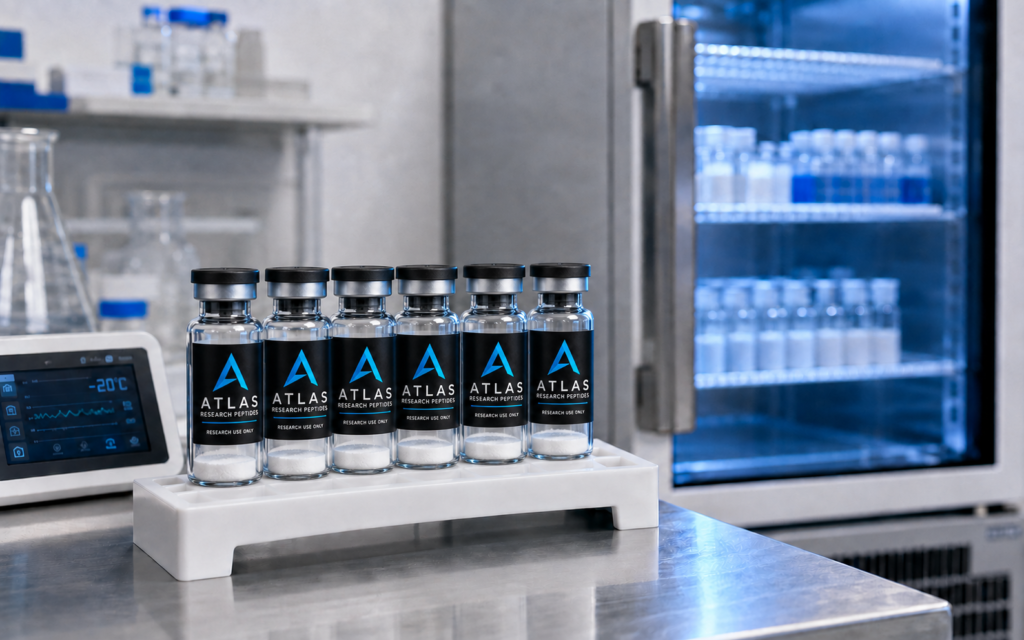
Lyophilized Material Storage Principles
General principles for documenting and controlling temperature, moisture, light exposure, handling, and storage history.
Read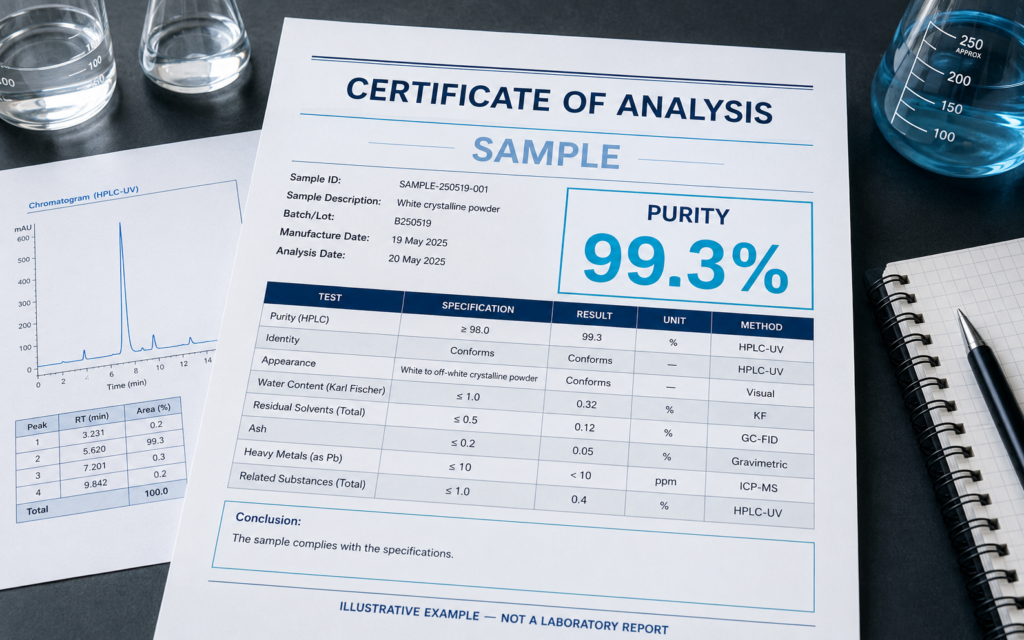
Reading a Certificate of Analysis
A practical guide to locating identity, lot, method, result, and limitation information in analytical documentation.
Read